How Much Play Does a Kitten Need? A Simple Guide by Age
Share
Most kittens need several short play sessions spread across the day. A good starting point is four or more sessions of 5 to 10 minutes, plus plenty of time to explore and play on their own. Kittens tire quickly and nap often, so short and frequent works much better than one long session.
Play is not just fun for a kitten. It is how they learn to move, hunt, judge distance and control their bite. Below is how much play kittens need at each age, how often to play, easy interactive kitten games, and how to choose toys that are safe for small cats.
Why kittens need so much play
A kitten's first year is a fast course in being a cat. Through play, kittens build:
- Coordination and strength. Pouncing, leaping and twisting build muscles and balance.
- Hunting skills. Stalking, chasing and catching are rehearsals for the hunt, even for a cat who will never need to hunt for food.
- Bite and claw control. Kittens learn how hard is too hard from littermates, and from the way you play with them.
- Confidence. New toys, sounds and textures, met through play, help kittens grow into calmer adults.
A kitten without enough play does not simply sit still. The energy goes somewhere else, often into your ankles, your curtains or a 3 a.m. sprint across the bed.
How much play does a kitten need, by age
Every kitten is different, but these ranges suit most:
Under 8 weeks
Young kittens mostly play with their mother and littermates. If you are caring for a very young kitten, keep play gentle and short: a soft toy to bat, a slow-moving feather on the floor. Let them sleep as much as they want.
2 to 4 months
This is when play really takes off. Expect short, intense bursts many times a day. Several 5 to 10 minute sessions work well, and your kitten will happily fill the gaps with solo play. Keep toys low, since kittens this age are still learning to land.
4 to 6 months
Kittens get bigger, faster and more athletic. Sessions can stretch to around 10 minutes, with higher jumps and longer chases. This is also when many kittens test their teeth on everything, so give them plenty of safe things to bite.
6 to 12 months
Think of this as the teenage stage. Energy is high, and many young cats are at their most active. Aim for at least two or three proper sessions of 10 to 15 minutes, as for adult cats, plus a few short extras when your cat asks. Our guide to how much playtime a cat needs covers adult cats in more detail.
How often should you play with your kitten?
Little and often. A simple routine that fits around most days:
- Morning: a short session before breakfast.
- Midday or after school or work: one or two short sessions if you are home, or a few rotated solo toys if you are not.
- Evening: a slightly longer, more active session.
- Before bed: a calm final game, then a meal. This helps many kittens sleep through more of the night.
You do not need to schedule every minute. If your kitten is awake, curious and following you around, that is usually a good moment for a few minutes of play. Our article on signs your cat wants to play shows what to look for.
Signs your kitten has had enough
- Lying down and watching the toy instead of chasing it
- Walking away or starting to groom
- Panting with an open mouth (stop and let them rest)
Signs your kitten needs more play
- Biting hands and pouncing on feet
- Racing around at night
- Climbing curtains or knocking things over
- Pestering other pets that do not want to play
Free: the Playtime Playbook
Our short guide to daily play that keeps indoor cats happy and healthy. Simple routines, no fancy equipment.
Interactive kitten games to try
These games are simple, need very little equipment, and suit small cats. Keep each one short and let your kitten win often.
1. Feather on the floor
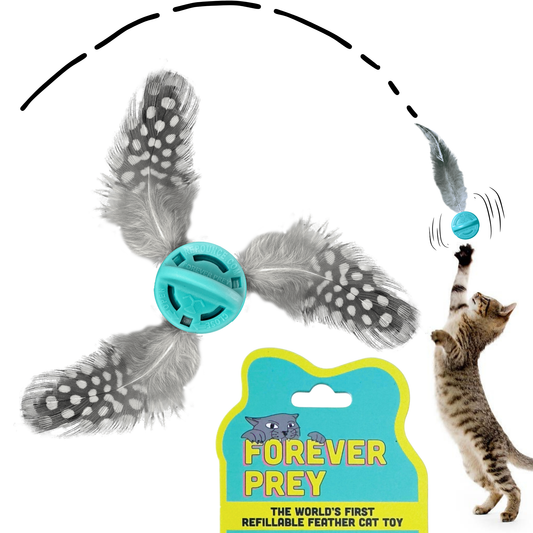
Drag a feather slowly along the floor, let it twitch, then pull it away and hide it behind a chair leg. Keep it low. Young kittens hunt at ground level long before they can judge high jumps. The Feather Toy Set gives you a few different feathers to rotate.
2. Mouse under the blanket
Slide a small toy under a blanket so only a bump moves. Stop, wiggle, move again. Most kittens cannot resist pouncing on the moving lump.
3. Crinkle ball chase
Roll a light crinkle ball or a scrunched paper ball across a hard floor. The sound and the unpredictable bounce make it a great first chase toy.
4. Box tunnels
Open both ends of a cardboard box, or line up two or three, and drag a toy through. Kittens love the mix of hiding and ambushing.
5. Easy treat hunt
For kittens on solid food, place a few pieces of kibble from their daily portion in easy spots nearby, such as next to a cushion or just inside a box. Make it harder as they get the idea.
6. Ribbon run
For older kittens, pull a ribbon quickly across the room and let them chase it down. Our Rainbow Ribbon Set is light and fast. Ribbons are for supervised play only, so put them away afterwards.
For more ideas as your kitten grows, see our list of interactive cat games.
Choosing safe toys for kittens
- Avoid small parts. Plastic eyes, bells and glued-on pieces can come loose and be swallowed.
- Supervise anything with a string. Wands, ribbons and strings are for playing together. Put them out of reach after every session.
- Pick light, soft toys. Small kittens do best with toys they can grab, carry and kick.
- Choose a wand with a flexible rod. A rod that bends lets you move the toy smoothly at kitten height and keeps your hands out of the way. See how to use a cat wand for movement tips.
- Do not expect much from catnip yet. Many kittens show little response to catnip until they are around six months old, so for now crinkle, texture and movement matter more.
A good first wand kit
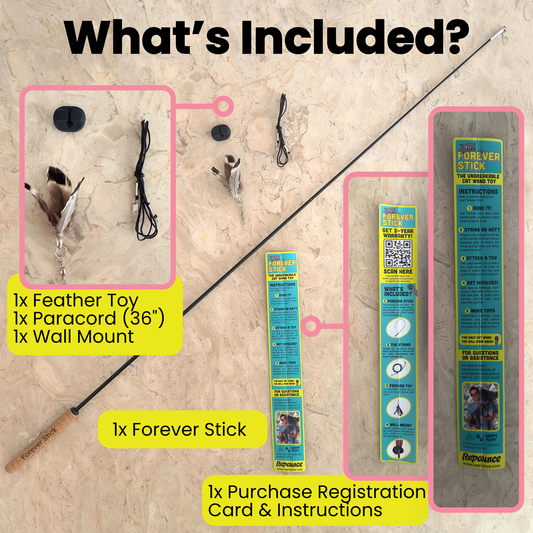
The Repounce Starter has a Forever Stick™, feathers and a pack of replacement strings in one box. It grows with your kitten into adulthood.
Play biting: teach it early
A tiny kitten biting your fingers can feel harmless. A grown cat doing the same is not. The habits your kitten learns now tend to stick.
- Never use your hands or feet as toys. Keep a toy between you and your kitten.
- Redirect, do not punish. If your kitten bites, go still, then offer a toy to bite instead.
- Pause the game if teeth touch skin. A short break teaches that biting people ends the fun.
- Give them something to wrestle. A soft toy they can grab and kick gives that energy a proper outlet.
If you are unsure whether rough play has tipped over into something else, our guide on how to tell if a cat is playing or fighting can help.
When to check with your vet
Kittens sleep a lot, but a healthy kitten is usually lively and curious when awake. If your kitten suddenly stops playing, seems weak or sleepy all the time, stops eating, or has diarrhea or vomiting, contact your vet promptly. Small kittens can become unwell quickly.
FAQ
How long should I play with my kitten each time?
Around 5 to 10 minutes per session suits most young kittens. Older kittens can manage 10 to 15 minutes. Stop when your kitten loses interest, lies down or starts panting.
Can a kitten play too much?
Kittens usually stop when they are tired, so overplaying is rare. Watch for open-mouth panting and give plenty of rest between sessions. Avoid long, high jumping games while your kitten is still small and learning to land.
Is it OK to leave toys out for my kitten?
Yes, for simple solo toys without strings or small parts, such as balls and soft kickers. Wands, ribbons and anything with a string should be put away after play.
When do kittens calm down?
Many cats become noticeably calmer somewhere between one and two years old, but it varies. Regular play does not make a kitten more hyper. It usually helps them settle. If your young cat still seems to want play all day, see why your cat always wants to play.
A few minutes of good play, several times a day, is one of the best things you can give a new kitten. It builds a confident cat and a lot of trust between you.