Interactive Cat Games: 10 Easy Ideas for Indoor Cats
Share
Interactive cat games are games you play together with your cat, where you move the "prey" or set up a challenge and your cat hunts, chases or solves it. Easy ideas include wand chases, hide and seek, treat hunts and the cup game, and most need nothing more than a toy, a few treats and ten minutes.
Indoor cats especially need this kind of play, since their home rarely surprises them. If you are still putting together a toy collection, see our guide to the best cat toys for indoor cats. Below are ten easy games that work for most cats, each with simple steps, followed by a short guide to interactive toys.
What are interactive cat toys?
An interactive toy is any toy that needs a person to bring it to life, or that responds to what your cat does. The main kinds are:
- Wand toys: a rod and string with feathers, ribbon or a small plush on the end. You control the movement.
- Puzzle feeders: toys your cat has to bat, roll or dig into to get treats or kibble.
- Automated toys: battery toys that move on their own. Fun for short spells, but they cannot read your cat the way you can.
Wand toys are the most versatile, because you can make them behave like a mouse, a bird or a bug. For tips on movement, see our guide on how to use a cat wand. Always supervise wand and string play, and put wand toys away afterwards.
10 interactive cat games to try
1. Bird in flight
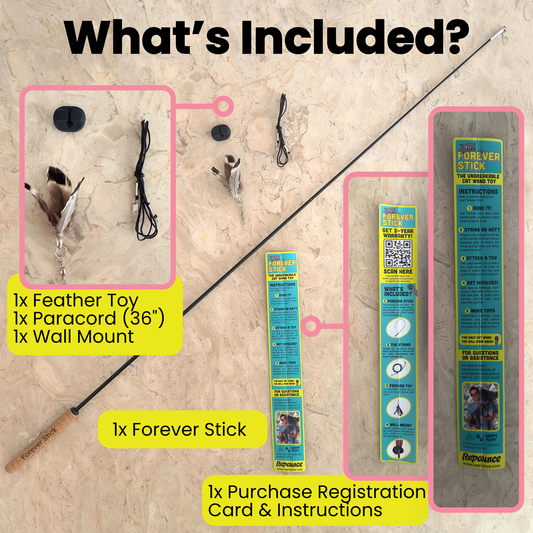
Clip a feather attachment to a wand with the string on. Let the feather land on the floor, flutter, then lift off and swoop in an arc just above your cat's head. Land it again a few feet away. Cats that love to jump will leap and twist for it. Keep the jumps low for kittens and seniors, and play on a rug or carpet so landings are soft.
2. Mouse under the blanket
Lay a blanket or towel on the floor. Slide a toy slowly underneath it so only a bump moves along. Stop, wiggle, move again. Most cats cannot resist pouncing on the moving lump. Let the toy pop out from the edge now and then so your cat gets a glimpse of the "mouse."
3. Around the corner
Stand in a doorway and let a toy peek around the door frame, then disappear. Repeat from slightly different heights. This plays to stalkers, who love to wait and ambush. Taking the string off a wand and clipping the toy straight onto the tip gives you precise, sneaky control for this one.
4. Ribbon racetrack
Long, fast ribbon runs are perfect for chasers. Drag a ribbon quickly across a hallway or along the length of a room, change direction, and pause behind a chair. Our Rainbow Ribbon Set is made for exactly this kind of fast, hard-to-catch play. Avoid stairs if your cat is older or less steady.
Free: the Playtime Playbook
Our short guide to daily play that keeps indoor cats happy and healthy. Simple routines, no fancy equipment.
5. Treat hunt
While your cat is in another room, hide a few small treats around the house: on a low shelf, behind a cushion, inside a slipper. Start with easy spots near where your cat is, then make it harder over time. Count the treats as part of their daily food allowance.
6. The cup game
Place a treat under one of three paper cups while your cat watches. Shuffle slowly, then let your cat find it. Many cats knock the cups over, which counts as a win. Keep the shuffle simple at first.
7. Muffin tin puzzle
Put a few treats or pieces of kibble in some cups of a muffin tin and cover every cup with a ping pong ball or crumpled paper. Your cat has to lift or bat the balls away to find the food. It is a free puzzle feeder and a good mental workout.
8. Box ambush
Cut a couple of hand-sized holes in a cardboard box. Push a toy in and out of the holes, or scratch and rustle inside the box. Cats often find a sound they cannot see more exciting than a toy in plain view.
9. Bathtub ping pong
Drop a ping pong ball into a dry bathtub or a large empty storage box. The ball bounces and rolls but cannot escape, so your cat can chase it in a small space. Give it a nudge now and then to keep it moving. Always make sure the tub is completely dry.
10. Wrestle and kick
For cats who like rough play, hold a long plush toy and let your cat grab it with their front legs and bunny kick with the back. Move it like a sparring partner would: retreat, advance, roll over. Our Dino plush has reinforced stitching for this, and catnip inside for cats who respond to it. Keep your hands at the far end of the toy.
Bonus: fetch
Some cats really do fetch. If your cat brings toys back to you, throw a small soft toy or crumpled paper ball a short distance and see if they return it. Our article on whether cats can play fetch explains how to encourage it.
Which games suit your cat?
Most cats have a favorite way to hunt, and matching the game to it makes a big difference. If you are not sure yet, watch what your cat does when a toy moves: do they crouch and wait, leap, run or grab?
- Stalkers: Mouse under the blanket, Around the corner and Box ambush.
- Jumpers: Bird in flight, with the toy moving in high, slow arcs.
- Chasers: Ribbon racetrack and Bathtub ping pong.
- Wrestlers: Wrestle and kick, followed by a calmer game to wind down.
- Thinkers and food lovers: Treat hunt, the cup game and the muffin tin puzzle.
- Seniors and gentle players: slow versions of Mouse under the blanket and easy treat hunts at floor level.
Mixing one active game with one brain game in a day is a nice balance. A chase burns energy, and a puzzle afterwards helps your cat settle.
Tips for better game time
- Play at dawn or dusk: cats are naturally most active then.
- Keep it short: two or three sessions of 10 to 15 minutes a day suit most adult cats.
- Rotate games: try a different game each day so nothing gets stale.
- Let them win: end with a catch, a found treat or a meal.
- Watch for overexcitement: if your cat's tail is lashing or ears are flattening, slow down and finish calmly.
- Clean up: put wands and strings away when the game ends.
FAQ
What games can I play with my indoor cat?
Wand chases, hide and seek with toys under a blanket, treat hunts, the cup game and muffin tin puzzles are all easy to start with. Most need only a toy or a few treats. Try a few and notice which ones your cat gets most excited about.
Are laser pointers good for interactive play?
They can get cats running, but there is nothing to catch, which can leave some cats frustrated. We cover this in are laser pointers bad for cats. If you use one, never point it toward your cat's eyes and finish by letting them pounce on a real toy or find a treat.
How long should I play games with my cat?
Most adult cats do well with two or three sessions of 10 to 15 minutes a day. Kittens like shorter, more frequent games, and seniors may prefer a few gentle minutes. Stop when your cat lies down or walks away.
What if my cat does not want to play?
Try a different game, a slower and sneakier movement, or a different time of day. Some cats take a while to warm up. If a cat that used to play suddenly loses interest, check with your vet.
You do not need fancy gear to play well with your cat, just a bit of curiosity. Pick two games from this list to try this week, and see which one becomes your cat's favorite.