When to Throw Away Cat Toys (and How Long They Should Last)
Share
Throw away a cat toy when it is torn, fraying, losing small pieces or can no longer be cleaned. How long that takes depends on the toy and the cat: feathers on a wand may last days to a few weeks with an enthusiastic hunter, while sturdy plush toys and well-made wands can last months or years.
Worn toys are not just untidy. Loose threads, broken feathers and small parts can be swallowed. Here is how long different toys usually last, what to look for, and how to keep the good ones going by replacing parts instead of the whole toy.
How long do cat toys last?
There is no fixed expiry date. A gentle senior cat might keep a toy mouse for a year, while a young cat who chews can destroy the same mouse in an afternoon. As a rough guide, here is what we see at home with Tolstoy and Gorba and hear from other cat owners:
| Toy type | Typical lifespan | What usually wears out first |
|---|---|---|
| Feather attachments | Days to a few weeks | Feathers break, bend or lose their fluff |
| Wand strings | Weeks to months | Fraying where the cat bites most |
| Ribbons and fabric teasers | Weeks to months | Frayed edges and loose threads |
| Small toy mice and crinkle balls | Weeks to months | Tails, ears and seams |
| Plush toys and kickers | Months, longer with reinforced stitching | Seams and stuffing |
| Catnip toys | The catnip scent fades over weeks | Scent first, then fabric |
| Puzzle feeders and solid balls | A year or more | Cracks, chips or sharp edges |
| A well-made wand rod | Years | Usually the string or attachment, not the rod |
How your cat plays matters as much as the toy. Chewers, wrestlers and big cats are hardest on toys. Cats who mostly chase and pounce wear toys out more slowly.
Signs a cat toy needs replacing
Check your cat's toys every week or two, and look over wand toys before each session. Replace or repair a toy when you see:
- Fraying strings or ribbons: loose fibers can be swallowed, and a weak string can snap mid-play.
- Broken or stripped feathers: once the shafts start splintering into small pieces, it is time.
- Torn seams or exposed stuffing: filling and crinkle material should stay inside.
- Loose small parts: eyes, bells, beads or tails that wiggle when you tug them.
- Cracks or sharp edges: on plastic balls, puzzle toys and anything hard.
- Toys that stay dirty or smelly: after cleaning, they still look or smell bad.
If your cat has swallowed part of a toy, or is vomiting, straining, off their food or unusually quiet after playing, call your vet right away. Do not try to pull out a string you can see in the mouth or under the tail, as that can cause injury.
Free: the Playtime Playbook
Our short guide to daily play that keeps indoor cats happy and healthy. Simple routines, no fancy equipment.
What about toys your cat ignores?
A toy your cat has stopped playing with is not necessarily finished. Cats get used to toys that are always lying around. Put it away for a few weeks and bring it back; it often feels new again. Our guide on whether cats get bored of toys explains how a simple rotation works.
If a toy is still in good shape but your cat never warms to it, pass it on to a friend or a local shelter rather than throwing it away. Many shelters welcome clean, safe toys.
Cat toy hygiene
Toys pick up saliva, hair, dust and whatever was on the floor. A quick clean every week or two keeps them fresher and lets you check for wear at the same time.
- Fabric and plush toys: many can be hand washed in warm water with a mild, unscented soap, then rinsed well and dried completely. Check the label first.
- Hard toys and puzzle feeders: wash with warm soapy water, rinse thoroughly and let them dry.
- Feathers: they do not wash well. Shake off dust, and replace them when they look tired.
- Catnip toys: washing removes the scent. Refresh with a pinch of dried catnip or a catnip spray instead.
Avoid strong cleaners, bleach and scented products, since cats are sensitive to smells and chemicals. If one of your cats has been ill, ask your vet whether shared toys should be cleaned more thoroughly or thrown away. Our guide on washing cat toys has more detail by material.
Replace parts, not whole toys
With most wand toys, the rod is fine long after the string and the feathers have given up. Throwing away the whole wand because the string frayed is wasteful, and it adds up quickly. A refillable toy lets you swap just the part that wore out.
Feathers
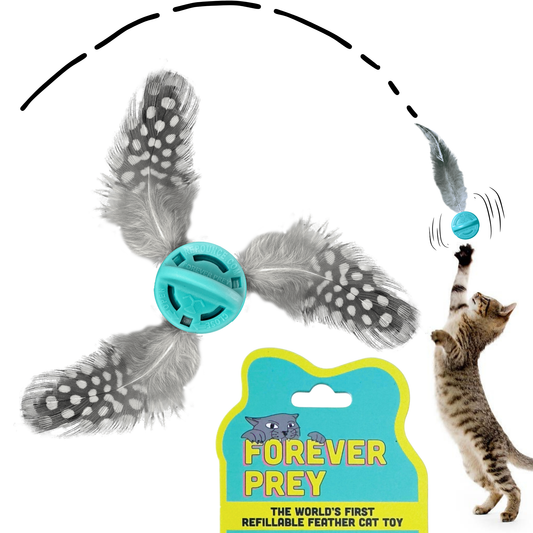
Feathers are meant to be used up. That is part of what makes them exciting, the way they flutter and twitch like a real bird. Our Forever Prey™ is built around this: twist it open, slot in fresh feathers, twist it shut. A pack of Replacement Feathers keeps it going for months, and the short, dotted feathers flutter in a way many cats find hard to resist.
Strings
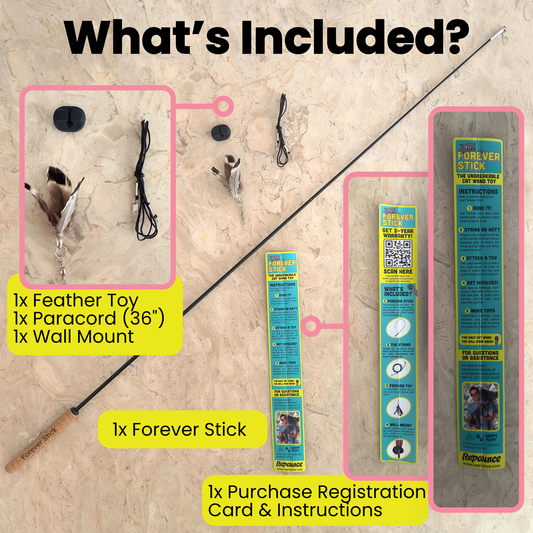
Strings take the most bites, so they wear out before anything else on a wand. Swap a frayed string straight away. If your cat chews through strings fast, the Heavy Chewers Pack gives you three tougher options, including a chew-proof metal string with a smooth coating. It fits the Forever Stick™ and most other wands.
Why cats destroy some toys so fast
Ripping a toy apart is normal hunting behavior: the bite and shake is how a cat finishes prey. Some cats are simply more thorough than others. If you live with a destroyer, there is no need to stop it. Put your budget into sturdy toys with replaceable parts, give them a kicker or plush they are allowed to shred, and keep a closer eye on wear.
FAQ
How often should you replace cat toys?
Replace a toy whenever it shows damage, rather than on a fixed schedule. Feathers and strings on wand toys often need swapping every few weeks with an active cat, while sturdy toys can last for many months. A quick check every week or two is enough for most homes.
Is it safe to let my cat play with a frayed string?
No. Loose fibers can be swallowed, and a weakened string can snap during play. Replace frayed strings straight away, and always put wand toys away after play.
Can you wash cat toys in the washing machine?
Some sturdy fabric toys can go on a gentle cycle, but check the label first and skip anything with feathers, electronics or catnip. Use a mild, unscented detergent and make sure the toy is completely dry before your cat plays with it again.
Should I throw away toys my cat no longer plays with?
Not necessarily. Put them away for a few weeks and reintroduce them, since cats often regain interest. If a toy is still in good shape but never gets played with, consider donating it to a shelter.
A small weekly check is all it takes to keep playtime safe. At home we give the toy basket a quick look once a week and swap worn feathers before they start shedding, which keeps Tolstoy and Gorba hunting the good stuff.