How to Clean Cat Toys: A Guide for Every Type of Toy
Share
Here is how to clean cat toys in short: wash soft toys in hot water with a little mild, unscented dish soap, scrub hard toys and rinse them well, spot clean feathers instead of soaking them, and let everything dry completely before your cat gets it back. Anything that is falling apart, still smells after washing or will not dry properly should be replaced rather than cleaned.
Cat toys collect saliva, food, litter dust and hair, and the ones your cat carries around or kicks get grubby fast. Here is a simple routine for every kind of toy.
How often should you clean cat toys?
There is no strict rule, but a rhythm like this works well for most homes:
- Puzzle feeders and treat toys: after every use with wet food, and every few days with dry food or treats.
- Plush, catnip and kick toys: every one to two weeks, or sooner if they are visibly dirty or soggy.
- Plastic and rubber toys: about once a week, especially balls that live under the sofa.
- Wand toys: wipe the rod now and then, and clean or swap the string and attachments when they look worn or dirty.
- Any toy: right away if it has been near the litter box, outdoors, in vomit, or played with by a cat that is unwell.
Toy rotation makes this easy. If you keep a few toys out and the rest put away, you can clean the ones going back into storage, and your cat gets a toy that feels new when it comes back out. We explain the idea in our post on whether cats get bored of their toys.
Safe cleaners, and what to avoid
Cats groom constantly and put toys in their mouths, so whatever you clean with should be gentle and rinse away completely.
Safe choices
- Hot water.
- Mild, unscented dish soap. A small drop is enough.
- A white vinegar solution, roughly one part vinegar to two parts water, for hard toys and odors. Rinse afterwards so the smell does not put your cat off.
- A little unscented laundry detergent for machine-washable toys.
What to avoid
- Bleach, unless your vet recommends a diluted solution for a specific reason. Residue is the risk, so rinse very thoroughly if you ever use it.
- Essential oils, including tea tree oil, which is toxic to cats even in small amounts.
- Cleaners that contain phenols, found in some household disinfectants.
- Strong fragrances such as scented detergent, fabric softener and dryer sheets. A toy that smells like flowers instead of home is often a toy your cat ignores.
Free: the Playtime Playbook
Our short guide to daily play that keeps indoor cats happy and healthy. Simple routines, no fancy equipment.
How to clean cat toys, step by step by type
Plush and catnip toys
Check the label first. Many plush toys can go in the washing machine on a gentle cycle: put them in a mesh laundry bag or a pillowcase, use a little unscented detergent, and skip the fabric softener. Toys with crinkle material, electronics or glued parts are better washed by hand in warm soapy water, squeezed gently and rinsed until the water runs clear.
Washing fades the scent of catnip toys. Once a toy is fully dry, you can refresh it by rubbing a pinch of dried catnip into the fabric, or by sealing it in a bag with some catnip for a day or two.
Plastic and rubber toys
Balls, springs, rubber mice and other hard toys are the easiest. Soak them for a few minutes in hot soapy water, scrub with an old toothbrush (pay attention to grooves and seams), rinse well and dry. Some hard plastic toys are dishwasher safe, but only put them in the dishwasher if the label says so.
Wand toys: rod, string and attachments
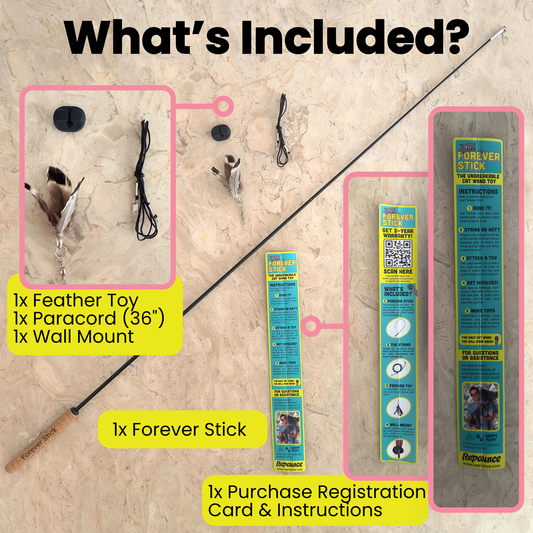
Think of a wand toy as three parts. The rod and handle only need a wipe with a cloth dampened in soapy water, then a dry towel. Natural materials like cork should not be soaked: wipe them, then let them air dry.
The string is where saliva and grime build up, because cats bite it and carry it around. If your wand has a detachable string, like the paracord string on our Forever Stick™, unclip it, hand wash it in warm soapy water, rinse it and hang it up to dry. If it is frayed, chewed or stiff with dirt, replace it instead.
Our Heavy Chewers Pack has three replacement strings for exactly that moment, including a chew-proof metal string with a smooth coating for cats that bite. Fabric, ribbon and plush attachments can be hand washed like plush toys. Feathers need their own approach.
Feathers: spot clean or replace
Feathers do not like water. Soaking flattens them, and they can take a long time to dry, which is when they start to smell. For light dirt, wipe the feather gently with a barely damp cloth, smooth it in the direction it grows, and let it air dry. If a feather is broken, bald, soggy or chewed, replace it. Feathers are made to be used up, and a damaged one can shed bits your cat might swallow.
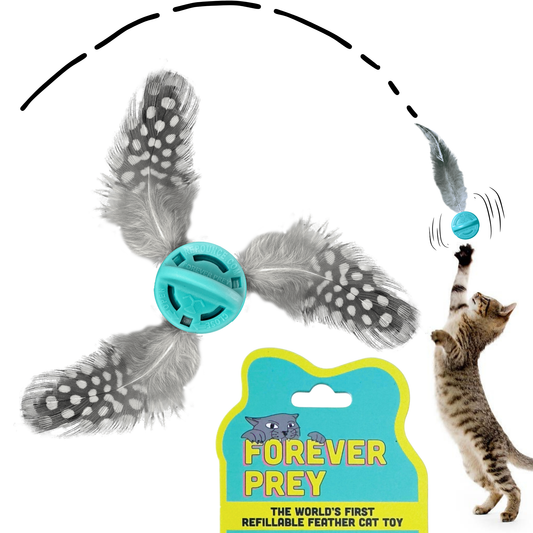
This is why we designed the Forever Prey™ to be refillable: twist it open, take out the tired feathers, slot in one to three fresh ones and twist it shut. Replacement Feathers come in packs of 10 to 100, so a swap is quicker and cheaper than trying to rescue a sad feather.
Rope and sisal toys
Rope and sisal hold on to dirt and moisture. Rinse rope toys in hot water with a drop of dish soap, squeeze out as much water as you can, and dry them somewhere warm and airy. Sisal is a plant fiber and does not handle soaking well, so brush it off, vacuum it, and spot clean with a damp cloth. If either one smells musty or stays damp inside, throw it out.
Puzzle feeders
Food residue is the main issue here, especially with wet food. Take the feeder apart if it comes apart, wash every piece in hot soapy water with a bottle brush or toothbrush for the corners, rinse well and dry completely before refilling.
Electronic and battery toys
Never submerge them. Remove the batteries, wipe the outside with a cloth dampened in soapy water or the vinegar solution, wipe again with a clean damp cloth, and dry. Removable fabric covers can usually be hand washed separately.
Machine washing vs hand washing
Machine washing is fine for sturdy plush and fabric toys whose label allows it. Use a gentle cycle, a laundry bag, a small amount of unscented detergent, and an extra rinse if your machine has one. Hand washing is better for anything with feathers, glue, crinkle material, catnip pouches, cork, electronics or loose stitching, because a machine can tear these apart or leave them soggy inside. When unsure, wash by hand.
Dry everything completely
A toy that stays damp inside can grow mold or bacteria and will start to smell, which defeats the point of washing it. Squeeze out the water, then air dry in a warm, well-ventilated spot. Plush can take a day or more. A low tumble dry works for some fabric toys if the label allows, but avoid high heat, which can melt plastic parts and weaken seams. Only give the toy back when it is dry all the way through.
When to replace instead of clean
Cleaning will not save every toy. Replace a toy when:
- Seams are opening or stuffing is showing
- Strings are frayed, knotted or chewed thin in places
- Small parts like eyes, bells or glued feathers are loose
- Feathers are broken, bare or keep shedding
- It still smells after washing, or shows any mold
- Plastic is cracked or has sharp edges
Our guide on when to throw away cat toys goes through the warning signs in more detail. With replaceable parts, you only swap the worn piece.
Hygiene in multi-cat homes and with sick cats
In a home with several healthy cats, shared toys are normal and usually fine. Things change when one cat is ill. Keep the sick cat's toys separate, clean them more often, and consider throwing away soft toys once your cat has recovered. Some infections are hard to kill with everyday cleaners, so ask your vet what to use for your cat's specific illness and how long to keep things apart.
FAQ
Can you put cat toys in the washing machine?
Many plush and fabric cat toys can go in the washing machine on a gentle cycle, inside a laundry bag, with a little unscented detergent. Check the label first, and hand wash anything with feathers, electronics, glued parts or crinkle material.
Is vinegar safe for cleaning cat toys?
A diluted white vinegar solution is a common, gentle choice for hard toys and odors. Rinse the toy afterwards and let it dry fully, since many cats dislike the smell of vinegar.
How do you clean feather cat toys?
Spot clean feathers with a barely damp cloth and let them air dry, rather than soaking them. If the feathers are broken, soggy or chewed, it is safer and easier to replace them.
Can I use disinfectant wipes on cat toys?
It is best to avoid them. Many household wipes and disinfectants contain fragrances or ingredients that are not safe for cats, so stick to hot water and mild soap, and ask your vet if you need to disinfect after an illness.
At home we fold cleaning into our weekly toy rotation: wash, dry, put away, bring something else out. It is also a good moment to spot anything that needs replacing.