What's Your Cat's Play Style? How to Find the Toys They Love
Share
Most cats have a favorite way to hunt, and that is their play style. Some chase things that fly, some stalk things on the ground, some hide and ambush, some wrestle and kick, and some leap high into the air. Once you know which one your cat is, choosing toys that actually get used becomes much easier.
Here is how to recognize each play style, a simple way to test your cat at home, and what to try if your cat does not seem to play at all.
Why cats have different play styles
Play is practice for hunting. In the wild, a cat might catch birds, mice, insects or lizards, and each kind of prey moves differently. Indoor cats keep those instincts, and most lean toward one or two kinds of "prey" that excite them more than others.
That is why the same toy can thrill one cat and bore another. It is rarely about the toy being good or bad. It is about whether it moves like the prey your cat is wired to chase. Many cats mix styles, and preferences can shift with age, mood and time of day, so think of these as tendencies rather than fixed labels.
The five cat play styles
1. Chasers and birders
What it looks like: Your cat watches birds through the window with chattering teeth, tracks anything that moves through the air, and launches upward to grab it. Fluttering, unpredictable movement is what gets them going.
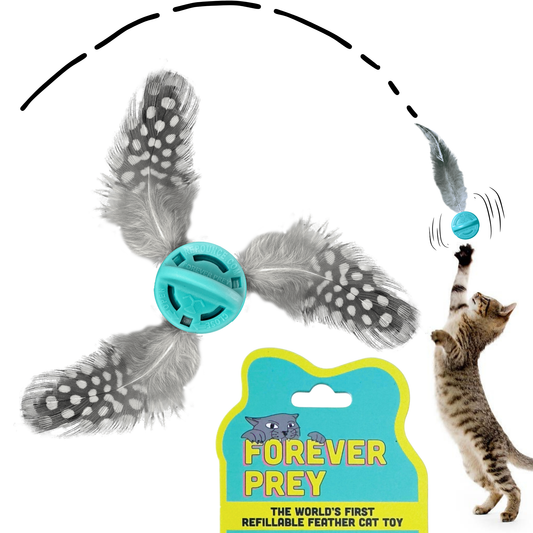
Toys to try: Feather attachments on a wand, moved in short flights with pauses and landings. Let the feather settle on the floor or a chair for a moment before it takes off again, just like a real bird. Our Feather Toy Set includes natural feathers with different flight patterns, which helps you find the one your birder likes best.
2. Ground hunters
What it looks like: Your cat ignores toys in the air but goes low and focused when something scurries along the floor, disappears under a rug or zips around a corner. These cats love the stalk as much as the catch.
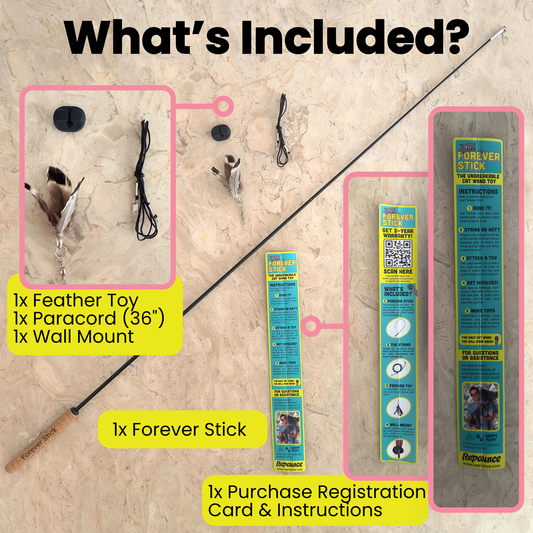
Toys to try: Anything that moves like a mouse: fast darts along the floor, sudden stops, and hiding behind furniture. A wand works well here if you keep the toy low. With the Forever Stick™, you can take the string off and clip a toy straight to the tip, which gives you sharp, quick moves along the floor that are hard to get with a dangling string.
3. Pouncers and ambushers
What it looks like: Your cat hides under the bed, behind a door or inside a box, waits, and then explodes out to grab whatever passes. You might also be the target, especially your ankles.
Toys to try: Give them something to hide behind and something to wait for. Slide a toy slowly past a box, a tunnel or the edge of a blanket, let it pause, then move it away. Toys that peek out and disappear again are perfect. Patience matters with these cats: if you keep the toy moving nonstop, they never get the chance to plan their pounce.
4. Wrestlers and kickers
What it looks like: Your cat grabs a toy with their front legs, rolls onto their side and kicks it hard with their back legs (the famous bunny kick). They may also wrestle with other cats or try to wrestle your hand.
Toys to try: A sturdy plush toy about the length of your cat's body, so they can hold it and kick properly. Never offer your hand as a wrestling partner, since that teaches your cat that hands are toys. The Dino plush is made with reinforced stitching for exactly this kind of play, and The Softie Bundle pairs two Dinos with ribbon toys for wrestlers and gentle players.
Free: the Playtime Playbook
Our short guide to daily play that keeps indoor cats happy and healthy. Simple routines, no fancy equipment.
5. Jumpers
What it looks like: Your cat loves vertical leaps, climbs the cat tree at full speed and twists in the air to catch things. Jumpers are often young, athletic cats with plenty of energy to burn.
Toys to try: Light, fast toys that whip and flutter, so your cat has to jump and twist to catch them. Ribbon attachments are great for this. Our Rainbow Ribbon Set has three satin ribbons in different lengths that are quick and hard to catch. Keep jumps reasonable and play on a carpet or rug to protect joints, especially for heavier or older cats.
How to find your cat's play style
You do not need special equipment, just a few days and a little attention. Here is the simple test we use:
- Pick one toy movement per style. A feather flying through the air, a toy darting along the floor, a toy peeking past a box, a plush to kick, and a ribbon flicked upward.
- Try each one for two or three minutes. Do this in one session or spread it out over a day. Move the toy away from your cat, not toward them. Prey runs away, it does not approach a predator.
- Watch the body language. Signs of real interest include ears pointed forward, wide pupils, a twitching tail tip, crouching and the classic wiggle before a pounce. Our guide to signs your cat wants to play goes into more detail.
- Repeat for three or four days. Try different times, especially early morning and evening, when many cats are naturally most active. One quiet session does not mean your cat dislikes a toy.
- Note the winner. The movement that gets the fastest, most focused response is your cat's main style. A close second is worth keeping in the rotation too.
At home with Tolstoy and Gorba, we have seen how two cats in the same house can react very differently to the same toy. That is why we keep a few kinds of toys on hand instead of one.
What if my cat doesn't seem to play?
Not every cat jumps at a toy straight away, and that does not mean they do not enjoy play. Often something small is getting in the way. Here are the most common reasons:
- The movement is wrong. Waving a toy in front of a cat's face, or moving it constantly without pauses, rarely works. Try slow, small movements at a distance, with plenty of stops.
- The timing is off. A cat who just ate or is ready to nap will not be interested. Try again before a meal or in the evening.
- The setting is busy. Shy cats may not play with people watching, other pets nearby or a lot of noise. A quiet room and a calm voice help.
- The toy is the wrong style. A ground hunter may ignore a feather in the air but light up when the same feather drags along the floor.
- Age and confidence. Senior cats often prefer shorter, gentler sessions. Cats from shelters or difficult backgrounds may need weeks before they feel safe enough to play.
Some cats are simply calmer players. Watching a toy intently, tapping it once or following it with their eyes still counts as play. Build on small wins, keep sessions short, and end before your cat loses interest. For more ideas, read our guide on how to encourage a cat to play.
If your cat used to play and suddenly stops, or seems stiff, sore, withdrawn or off their food, talk to your vet. A sudden loss of interest in play can be a sign of pain or illness, so it is worth ruling that out first.
FAQ
Do all cats like to play?
Almost all cats have hunting instincts, but how they like to play varies a lot. Some cats need the right toy, the right time or a quieter setting before they join in. Calm, short sessions often work better than long, busy ones.
How do I know what toys my cat likes?
Try different toy movements over a few days and watch your cat's body language. Ears forward, wide pupils, a twitching tail and a crouch before pouncing are good signs. The toy that gets the quickest, most focused response is usually the winner.
Can a cat's play style change?
Yes. Kittens often try everything, adult cats usually settle into favorites, and senior cats may switch to slower, ground-level play. Mood and energy also matter, so keep a mix of toys and check in on your cat's preferences now and then.
Why does my cat only play with one toy?
That toy probably matches your cat's play style very well. You can build on it by trying similar toys or moving the favorite toy in new ways. Rotating toys every few days also keeps the old favorites feeling fresh.
Once you know how your cat likes to hunt, play gets easier and a lot more fun for both of you. Start with the test above and let your cat show you what they like.