Using Play to Fix Cat Behavior: Biting, Night Zoomies and More
Share
Many common cat behavior problems, like biting hands, night zoomies, attention-seeking and scratching furniture, come from unused hunting energy. Regular, well-timed play gives that energy a better outlet, and redirecting it onto toys is often the fastest, kindest fix.
Below, we go through the most common problems one by one, with practical steps you can start today. We also cover the signs that a behavior change is medical and needs a vet, not more playtime.
Why play changes behavior
Cats are built to hunt several times a day. A typical hunt follows a pattern: stalk, chase, pounce, catch, eat, groom, sleep. Indoor cats often skip most of that cycle. Food arrives in a bowl, and the energy meant for hunting has to go somewhere. Too often it goes into your ankles, the sofa or a 4 a.m. sprint down the hallway.
Play fills that gap. A good session lets your cat run through the whole hunting sequence and finish satisfied. Two or three short sessions of 10 to 15 minutes a day suit most adult cats. The key ideas that run through every fix below are simple:
- Redirect, don't punish. Yelling, spraying water or tapping your cat's nose adds stress and fear, which often makes behavior worse. Give the energy somewhere better to go instead.
- Be consistent. Cats learn from routine. Play at similar times each day and respond to unwanted behavior the same way every time.
- End with a catch. Let your cat catch the toy at the end of a session, then offer a meal or treat. This completes the hunt and helps your cat settle.
Play aggression: biting hands and attacking ankles
Play aggression is one of the most common behavior problems in cats. It usually looks like a cat who ambushes feet, grabs hands with teeth and claws during petting, or wrestles your arm. It is most common in young cats and in cats who were played with using hands as kittens. If you are unsure whether you are seeing rough play or real aggression, our guide on cat play versus aggression explains the difference.
What helps:
- Never use hands or feet as toys. Every time a hand becomes prey, the lesson is reinforced. This includes wiggling fingers under a blanket.
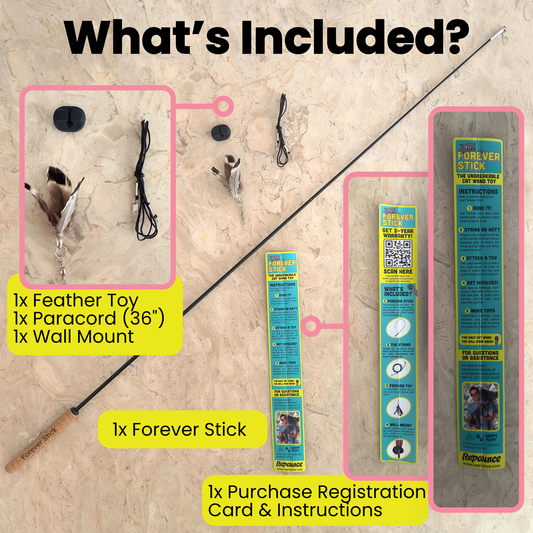
- Use a wand to keep distance. A long wand puts space between your hands and your cat's teeth. The Forever Stick™ gives you 36 inches of reach, which is plenty for even enthusiastic players.
- Stop when teeth meet skin. If your cat bites, go still and quiet, then calmly move away. Biting ends the fun, so it stops being rewarding.
- Get ahead of ambushes. If your cat attacks ankles at certain times, play before those times. Carry a small toy and toss it ahead of you when you see your cat crouching, so the target moves away from your feet.
Night zoomies and early morning wake-ups
Cats are naturally most active around dawn and dusk. If your cat races around at night or wakes you up at 4 a.m., they are often just ready to hunt while you are ready to sleep.
- Play hard before bed. A lively 15-minute session in the evening, ending with a catch, helps tire your cat out.
- Follow play with food. Give the last meal of the day right after the evening session. Hunt, eat, groom, sleep is a natural rhythm, and many cats settle well after it.
- Don't reward the wake-up call. If you get up to feed or play when your cat pounces on you at dawn, you teach them that it works. An automatic feeder set for early morning can help break the link.
Some night activity is normal, but a cat who suddenly becomes restless or vocal at night, especially an older cat, should see a vet. See the section on medical causes below.
Free: the Playtime Playbook
Our short guide to daily play that keeps indoor cats happy and healthy. Simple routines, no fancy equipment.
Attention-seeking behavior
Knocking things off tables, meowing constantly, climbing on your keyboard or chewing cables can all be ways of saying "pay attention to me." Often, the cat has learned that this gets a reaction, even a negative one.
- Schedule play before it is demanded. Predictable sessions at set times reduce the need to ask.
- Reward calm, not demands. When your cat is quiet, offer play or attention. When they knock a glass off the counter, stay neutral and give as little reaction as possible.
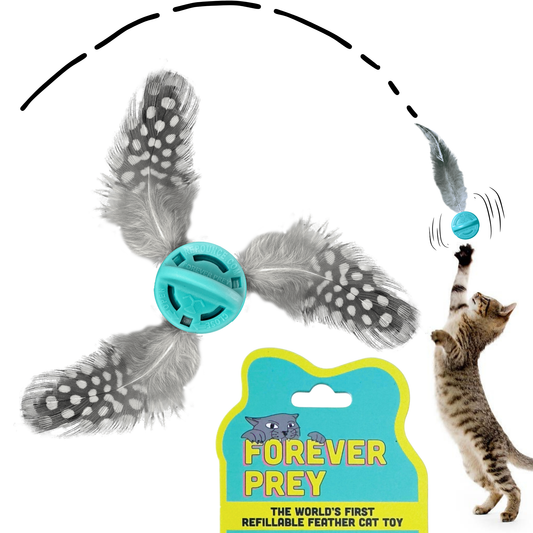
- Offer solo play during the day. A light toy your cat can bat around alone, like the Forever Prey™ feather toy tossed across the floor, gives them something to do while you work.
Scratching furniture
Scratching is a normal, healthy behavior. Cats scratch to stretch, keep their claws in shape and leave scent marks. The goal is not to stop it, but to move it somewhere acceptable.
- Provide the right scratcher. Most cats prefer a sturdy post tall enough to stretch out fully, or a flat cardboard scratcher. Place scratchers next to the furniture your cat targets and near sleeping spots, since many cats scratch right after waking.
- Play near the scratcher. Drag a wand toy across or up the post so your cat digs in their claws while chasing it. Ending a session with the toy on the scratcher builds a positive association.
- Make the furniture less appealing. Cover the favorite spot with a throw or double-sided tape for a few weeks while the new habit forms.
Multi-cat tension
In homes with more than one cat, tension can show up as chasing, blocking doorways, hissing or one cat hiding. Play can lower stress, but it needs to be set up so every cat feels safe.
- Play separately if needed. A confident cat may take over a shared session while a shyer cat watches. Give each cat their own time, in different rooms if that helps.
- Use two wands for shared play. If you play together, one toy per cat avoids competition. A second person makes this much easier.
- Reduce competition elsewhere. Separate food bowls, water, litter boxes and resting spots help, especially in different parts of the home.
Real fights with injuries, constant hiding or a sudden change between cats who used to get along are reasons to talk to your vet.
Boredom
Bored cats may overeat, sleep more than usual, pester other pets or get into things they should not. Boredom is especially common in indoor cats with the same toys every day.
- Rotate toys. Keep a few toys out and put the rest away, then swap them every few days. Old toys feel new again. Our article on whether cats get bored of toys explains how to set up a rotation.
- Add foraging. Puzzle feeders and hidden treats let your cat work for some of their food.
- Improve the view. A window perch near a bird feeder can provide hours of quiet entertainment.
Whatever toys you use, always supervise wand and string play, put wand toys away after each session, and replace worn parts.
When it's medical: talk to your vet first
Play helps with many behaviors, but it cannot fix pain or illness. Some behavior changes are a cat's only way of telling you something is wrong. Contact your vet if you notice:
- Aggression that appears suddenly, especially in a cat who was previously gentle
- Peeing or pooping outside the litter box
- Hiding, withdrawal or a sudden loss of interest in play
- Changes in appetite, thirst or weight
- Over-grooming, bald patches or constant licking of one area
- New night-time restlessness or yowling, particularly in senior cats
- Limping, stiffness or reluctance to jump
If your vet rules out medical causes and the problem continues, ask about a referral to a veterinary behaviorist or a qualified cat behavior consultant. They can look at your home and routine and build a plan for your cat.
FAQ
Can playing with my cat stop them from biting?
Often, yes. Most biting during play comes from hunting energy aimed at hands. Daily wand play that keeps hands out of reach, plus calmly stopping when teeth meet skin, usually reduces it within a few weeks.
How do I stop my cat from waking me up at night?
Play an energetic session in the evening, end with a catch, and feed right after. Avoid getting up to feed or play when your cat wakes you, since that rewards the behavior. If night activity starts suddenly, check with your vet.
Should I punish my cat for bad behavior?
No. Punishment makes cats fearful and stressed, which can make behavior worse and damage trust. Redirecting energy onto toys and rewarding the behavior you want works far better.
When should I see a vet about my cat's behavior?
See a vet for any sudden change, aggression out of nowhere, litter box problems, hiding, appetite loss or signs of pain. Behavior changes are often the first sign that a cat is unwell.
Most behavior problems ease when a cat gets the right kind of play at the right times. Start small, stay consistent, and give it a few weeks. Your cat, and your ankles, will be happier for it.