Best Toys for Senior Cats: Gentle Play That Keeps Them Sharp
Share
The best toys for senior cats are ones that move low and slow: a wand toy dragged gently along the floor, soft feather toys, catnip kick toys and easy puzzle feeders. Older cats still enjoy play, but they usually prefer shorter sessions, ground-level movement and less jumping than they did when they were young.
Play does not stop mattering as a cat ages. It just changes shape. Here is why it is worth keeping up, how to adapt it, and which signs mean it is time to check in with your vet.
Why play still matters for older cats
It is easy to assume a senior cat just wants to sleep. Many do sleep more, but a little daily play still does a lot of good:
- Gentle movement. Regular, easy activity helps keep muscles working and supports a healthy weight.
- Mental stimulation. Tracking a moving toy, planning a pounce and solving a puzzle feeder keep an older cat engaged with the world around them.
- Routine and comfort. Older cats often like predictability. A short play session at the same time each day becomes something to look forward to.
- Time together. Play is one of the best ways to bond, and it gives you a daily chance to notice how your cat is moving and feeling.
That last point matters more than it sounds. Changes in how a cat plays are often one of the first clues that something is bothering them.
How to adapt play for a senior cat
Keep it low
Move toys along the floor rather than high in the air. Ground-level movement lets a senior cat stalk and pounce without big leaps or hard landings. Slide a toy around a chair leg or under the edge of a blanket and let them creep up on it.
Keep it slow
Fast, darting movements can be hard for an older cat to follow. Slower movements with pauses give them time to watch, wiggle and pounce. A toy that twitches and stops is often more tempting than one that races away.
Keep it short
Instead of two long sessions, try several shorter ones of around five minutes, more often. Watch your cat and stop while they are still interested, before they get tired or lose focus.
Let them win
Catching the toy is the satisfying end of every hunt. With a senior cat, let them catch it more often and more easily. A successful catch, followed by a treat or a meal, is a lovely way to end a session.
Pick the right time and place
Play when your cat is naturally alert, often in the morning or early evening. Choose a soft rug or carpet rather than a slippery floor, and keep the space clear so they do not have to climb or jump to reach the toy.
Free: the Playtime Playbook
Our short guide to daily play that keeps indoor cats happy and healthy. Simple routines, no fancy equipment.
Good toy types for senior cats
A wand toy, used gently
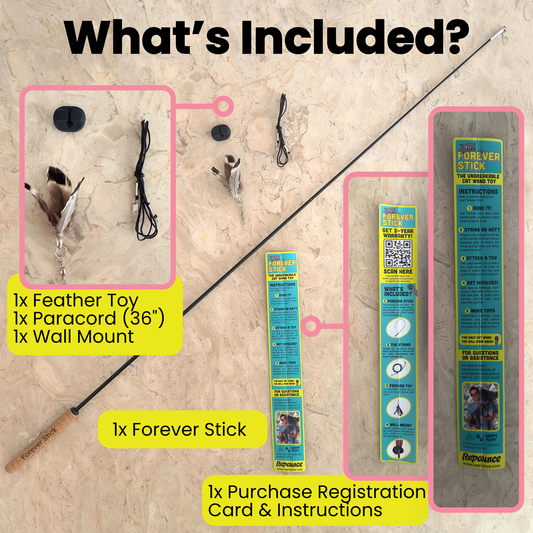
A wand is still one of the best toys for an older cat, because you control the speed and height. A long, flexible wand lets you drag a toy along the floor from a comfortable distance, so the cat can stalk without you leaning over them. The Forever Stick™ has a cork handle that is easy to hold, 36 inches of reach and a detachable string. You can take the string off and clip a toy right to the tip for slow, controlled moves along the floor.
Soft feather toys
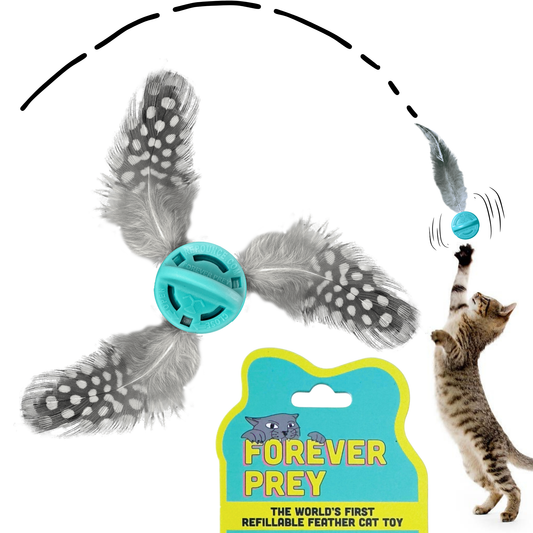
Feathers move with very little effort, which makes them good for gentle play. A light feather toy dragged slowly or wiggled in place often gets an older cat's attention. The Forever Prey™ is a refillable feather toy that works on a wand or on its own: toss it a short distance, or just leave it within reach for a cat who likes to bat at things from a lying position.
Catnip and kick toys
Many senior cats still love to lie on their side, hug a toy and kick it. A soft plush with catnip can be a good match, because the cat can play without getting up much. Our Dino plush has organic catnip, a gentle crinkle sound and reinforced stitching. Not every cat reacts to catnip, and some respond less as they age, but it is worth a try.
Easy puzzle feeders
A simple puzzle feeder or treat ball gives a senior cat something to think about. Choose an easy design so they succeed quickly, and use part of their usual food so you are not adding extra calories.
Toys to use carefully
Laser pointers can encourage sudden turns and leaps, and the cat never gets to catch anything. Toys that require lots of jumping are better saved for younger cats. As always, supervise wand and string play, put wand toys away afterward and replace worn parts.
Signs to check with your vet
Older cats are good at hiding discomfort, so watch for changes during play and daily life. Talk to your vet if you notice:
- Stiffness, limping or a slower, more careful walk
- Reluctance to jump onto places they used to reach easily
- Sudden loss of interest in play or in toys they used to love
- Signs of pain, like flinching or crying out when touched
- Hiding more than usual, or grumpiness out of character
- Changes in appetite, weight, grooming or litter box habits
These changes can have many causes, and some are very treatable. A vet can check what is going on and may suggest ways to keep your cat comfortable and moving. If your cat seems withdrawn in general, our article on signs of a sad cat may also help.
A simple gentle routine
- Morning: five minutes of slow wand play along the floor, ending with a catch and breakfast.
- Midday: an easy puzzle feeder or a kick toy left within reach.
- Evening: another short session with a feather toy, then a treat.
Adjust to your cat. Some seniors are happy with one short session, others still want three. For general guidance on how much play cats need at different life stages, see our guide on how much playtime a cat needs.
FAQ
Do senior cats still want to play?
Most do, although they often play differently than when they were young. Many prefer slower, shorter, ground-level play. If an older cat suddenly stops playing altogether, it is worth a vet check.
How long should I play with an older cat?
Short sessions of around five minutes, a few times a day, suit many senior cats. Follow your cat's lead and stop while they are still interested.
What age is a cat considered a senior?
Many vets consider cats seniors from around 10 or 11 years old, though it varies from cat to cat. Some stay very active well beyond that, while others slow down earlier.
What are the best toys for an older cat with stiff joints?
Choose toys that can be played with lying down or with little movement, like soft kick toys, feather toys wiggled close by and easy puzzle feeders. Ask your vet about the stiffness itself, since there may be ways to make your cat more comfortable.
A senior cat who still pounces on a slow-moving feather is a happy sight. Play does not have to be fast or long to matter. It just has to fit the cat in front of you.