Cat Play Dates: Are They a Good Idea? (And How to Do Them Safely)
Share
Cat play dates can work for a small number of cats, mainly kittens, young social cats and cats that already know each other, but most adult cats do not enjoy meeting unfamiliar cats and find it stressful rather than fun. Cats are territorial in a way most dogs are not, so a play date in the dog park sense is rarely what a cat is hoping for.
That does not mean your cat is destined to be lonely. Below we look honestly at which cats might benefit, how to try it safely if you do, the signs that mean stop, and the alternatives that give most cats what they actually need.
Can cats have play dates with other cats?
They can, but it is the exception rather than the rule. Cats are not pack animals. Many live happily with cats they grew up with or were carefully introduced to, but a strange cat arriving in their space usually reads as an intruder, not a new friend. Even friendly, confident cats may hiss, hide or swat at a newcomer.
There is also a timing problem. Cats often need days or weeks of gradual introduction before they accept another cat. A single afternoon visit rarely gives them that, so a play date can turn into a short burst of stress for both cats, followed by a few unsettled days at home.
Which cats might enjoy cat play dates
- Kittens, who are still learning social skills and usually adapt to new cats more easily than adults.
- Young, social, confident cats that have lived with other cats before and actively seek out company.
- Cats that already know each other, such as littermates or former housemates now living in different homes, as long as they parted on good terms.
Cats that are less likely to enjoy it include seniors, shy or anxious cats, cats with health problems, cats that have lived alone for years, and any cat that gets upset at the sight of cats through the window. If your cat fits one of these groups, skip the play date and focus on the alternatives further down.
Health prerequisites
Before any meeting, both cats should be:
- Up to date on vaccinations
- Recently checked by a vet, and free of fleas, worms and signs of illness such as sneezing or runny eyes
- Spayed or neutered, which tends to reduce territorial behavior, spraying and fighting
- Tested for any infectious diseases your vet recommends, such as FIV and FeLV
Your vet knows your cat's history and can tell you whether a meeting makes sense at all, and which precautions to take.
Free: the Playtime Playbook
Our short guide to daily play that keeps indoor cats happy and healthy. Simple routines, no fancy equipment.
How to set up a cat play date safely
Think twice about neutral ground
With dogs, people often recommend meeting on neutral ground. For cats it usually works the other way. Being taken somewhere unfamiliar is stressful in itself, and a cat in a strange place is more likely to be frightened and defensive. Introductions between cats are normally done gradually at one cat's home, with the visiting cat given a room of its own first. If one cat is calmer and more adaptable, it is usually the better one to travel.
Start with scent, not faces
A few days before, swap a soft cloth that has been rubbed gently on each cat's cheeks, so they get used to each other's smell. On the day, let the visiting cat settle in a separate room with its own litter box, water, food and a hiding spot. Let the cats sniff under the door or look at each other through a baby gate before they share a room.
Keep the first meeting short
Ten to fifteen minutes is plenty. Let both cats approach in their own time, and never carry or push one toward the other. Give them something else to focus on: a wand toy each, a few treats on the floor, and somewhere high to retreat to.
Supervise the whole time
Stay in the room. Keep a towel or a large piece of cardboard nearby so you can calmly block their view of each other if things get tense, rather than putting your hands between two cats.
End on a good note
Finish while things are calm, even if it is going well. If you want to repeat it, build up slowly over several visits rather than making each one longer.
Warning signs to stop
Separate the cats calmly and end the visit if you see:
- Hissing, growling or yowling that does not settle
- Flattened ears, a puffed-up tail, an arched back or a low crouch
- Hard staring and stalking, or one cat blocking the other from food, the litter box or a way out
- Chasing where one cat is clearly trying to get away
- Hiding for the whole visit
- Swatting with claws out, or any real fight
Some play between cats looks rough, so it helps to know the difference. Our guide to cat play versus aggression covers the body language to watch.
After a stressful meeting, keep an eye on both cats for a few days. If either one stops eating, hides for long periods, or starts peeing outside the litter box, call your vet.
Better alternatives for most cats
Interactive play with you
For most cats, you are the best playmate they have. A wand toy lets you act like prey: hiding, darting, pausing, and finally letting your cat catch it. Two or three short sessions of 10 to 15 minutes a day suit most adult cats, and they give your cat the social play and exercise a play date promises, without the stress.
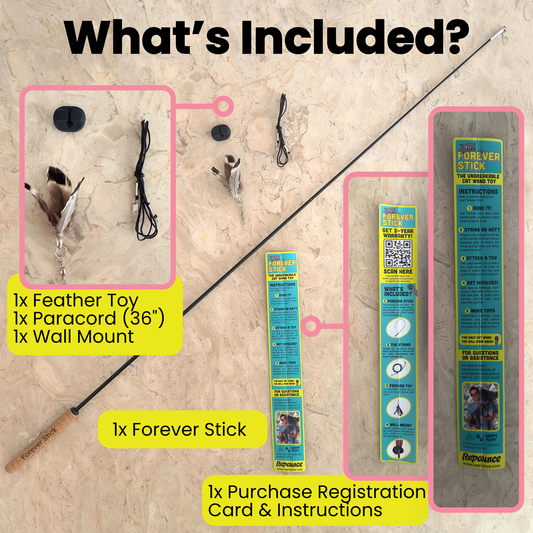
A durable wand like the Forever Stick™ makes this easier, with 36 inches of reach and a springy glass fiber rod that lets the toy move like something worth hunting. Always supervise wand play and put the wand away afterwards.
If you want ideas for making those sessions count, our post on how to use a cat wand walks through the basics.
A second cat, adopted carefully
If your cat is young, social and seems to want company, a permanent companion may suit them better than occasional visits. Choose a cat with a similar age and energy level, and plan a slow introduction over weeks, not hours. Shelters and rescues can often tell you which cats have lived well with others.
Window watching and enrichment
A secure window perch with a view of birds gives many cats hours of calm entertainment. Add puzzle feeders, rotating toys, cardboard boxes and places to climb, and an indoor cat has plenty going on without needing a visitor.
FAQ
Can cats have playdates?
Some can, mostly kittens, young social cats and cats that already know each other. Many adult cats are territorial and find unfamiliar cats stressful, so for them a playdate does more harm than good.
Do cats get lonely without other cats?
Some cats enjoy feline company, while many are content as the only cat as long as they get daily play and attention from their people. Overgrooming, excessive meowing or destructive behavior can point to boredom or stress, and are worth mentioning to your vet.
Is it better to meet at home or on neutral ground?
For cats, neutral ground is often more stressful, not less. Introductions are usually done gradually at one cat's home, with the visiting cat given a separate room to settle in first.
Can I take my cat to a friend's house to meet their cat?
You can, if both cats are healthy, vaccinated, neutered and fairly confident. Keep the visit short, give your cat a quiet room to retreat to, and be ready to head home at the first signs of stress.
We test our toys at home with Tolstoy and Gorba, and our takeaway is simple: most of the social play a cat needs can come from you, a good toy and a few minutes a day.